
AI summary
Summary of article:
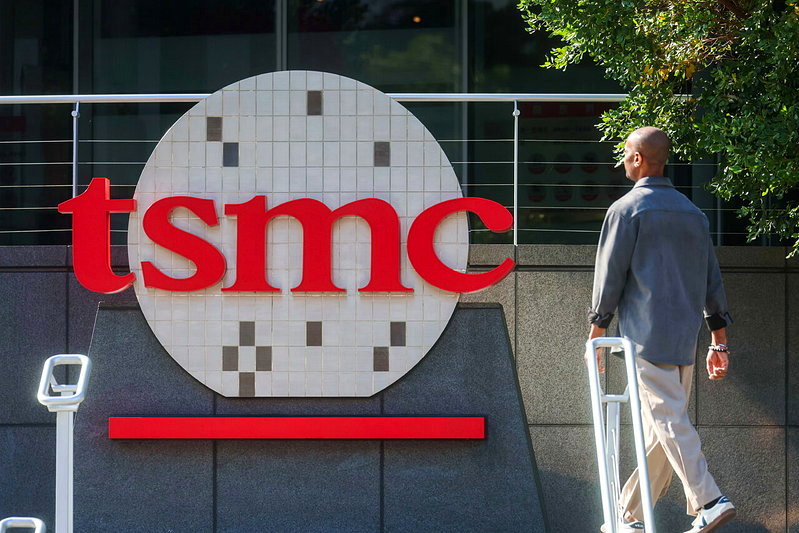
Reuters reported that TSMC is evaluating replacing rare earth parts in factory automation equipment with rare earth-free motors to reduce reliance on and risks to China’s supply chain.
Reuters reported, citing three people familiar with the matter,TSMC currently working on factory equipmentrare earth Look for alternatives to reduce the risk of facing Beijing’s export controls.
The world’s largest wafer foundry has consulted suppliers about the feasibility of using rare earth-free motors in factory automation equipment, said three industry executives briefed on TSMC’s plans. One of the people said the action was driven primarily by concerns over potential supply disruptions from China.
Two sources said discussions were still in the early stages and rare earth-free devices had not yet been introduced.
This news has come out for the first time, stating that China’s control over rare earths has become a weakness of the global semiconductor industry. Last year, China introduced export controls on specific rare earth raw materials, magnets and related processing technologies that require prior licensing.
Rare earth magnets are widely used in industrial equipment motors to drive moving parts of machinery, including magnets used in highly automated factories such as TSMC. Shortages of these specialized components could disrupt the production of chips needed for smartphones, artificial intelligence (AI) systems, data centers and customers in the defense supply chain.
TSMC did not immediately respond to a Reuters request for comment.
Before TSMC took this action, the US and Taiwan governments had successively said they would begin looking for ways to reduce their dependence on China’s rare earths and key mineral supply chains.
Gu Lian, director of the American Institute in Taiwan (AIT), said in June that the United States is working with Taiwan and other partners to develop alternative supply sources, expand processing capacity and create more resilient supply chains.
Taiwan’s Economy Minister Gong Ming-shin said in February that the government would support the Industrial Research Institute in developing rare earth technology and planned to set up a trial large-scale production line within three years, which is expected to meet about 50% of domestic demand.
A US think tank familiar with the discussions said US officials have shown high interest in ITRI’s research work and have begun discussions with the agency on diversifying the supply chain for critical minerals. The US State Department did not immediately respond to a request for comment.
ITRI said in a statement that it was planning a rare earth project in collaboration with the Industrial Technology Division of the Ministry of Economic Affairs, but did not provide further details.
Summary FAQ
-
TSMC aims to reduce the risk that China could disrupt supplies of rare earths and avoid Beijing’s export controls from affecting the operation of factory equipment and subsequent chip production. This discussion is still in its early stages and related tools have not yet been actually introduced.
-
Sources said TSMC has consulted with suppliers about the feasibility of using rare earth-free motors in factory automation equipment, but discussions are still in their early stages and there has not yet been an actual purchase or deployment of rare earth-free equipment.
-
This shows that China’s control over rare earths has become a weak point in the semiconductor industry. It has also prompted the United States and Taiwan to accelerate the exploration of alternative sources, expand processing capacity, and promote the diversification of key mineral supply chains through institutions such as the Industrial Research Institute.