
AI summary
Summary of article:
The market is worried about a reversal of the AI investment boom, which has led to increased demand for CDS hedging. Oracle, Huida, Meta and other technology and cloud companies have set new highs in default premiums.
Investors worried about the reversal of the AI craze have rushed to buy credit default swaps (CDS) as a hedge, driving up trading volume again for the financial instrument made famous during the global financial crisis.
Companies are borrowing heavily to invest trillions of dollars in building AI infrastructure, which is also driving demand for CDS. This type of derivative product acts like insurance. Once the company concerned defaults on its loan, the buyer can receive compensation as per the contract.
The Financial Times, citing Morgan Stanley research data, reported that in September, Oracle, SpaceX, Alphabet, Amazon,meta Broadcom and HUIDA (NVIDIA ) bond CDS, average weekly trading volume exceeded $9 billion, up from less than $2 billion in July.
Morgan Stanley estimates that AI-related companies will raise about US$466 billion by issuing bonds in 2026 for infrastructure such as data centers and chips, significantly higher than US$101 billion in the same period in 2025.
Although the scale of borrowing has fallen from its peak in June, investors say that more and more debt-heavy companies are facing AI investment risks, and the market is worried about whether these investments can make money, which has increased the demand for CDS.
Jim Caron, chief investment officer of Morgan Stanley Investment Management’s portfolio solutions division, said: “When market risks are so concentrated, you obviously want to buy CDS.” He said that it is also a low-cost hedging tool.
Bloomberg data shows that the trading volume of the US corporate bond CDS index this year has exceeded last year.
There is growing uneasiness among investors regarding heavily borrowed companies and CDS of many AI-related companiespremium price This month it reached a record high.
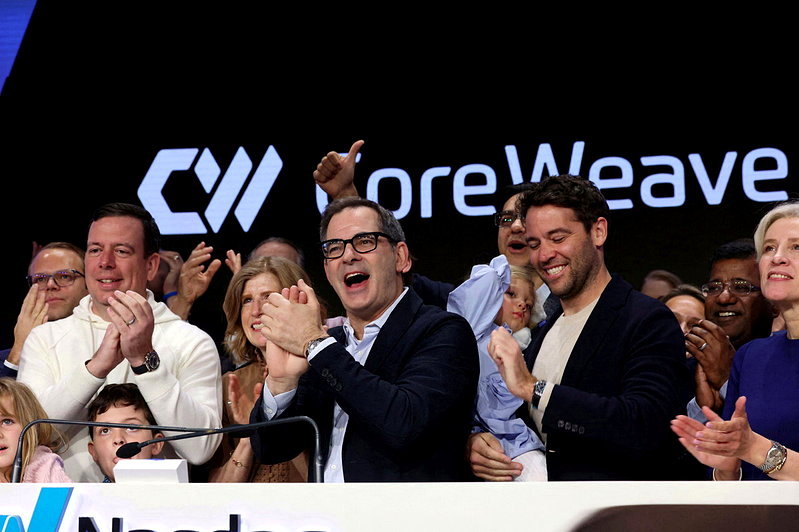
Insurance premiums have recently risen not only for AI cloud provider Coreview, which the market considers high risk, but also for companies like Microsoft, which are considered relatively safe.
Manish Kabra, head of US equity strategy at Societe Generale, said: “CDS has become an important indicator of investors’ attitudes towards the financing of large cloud companies and overall AI investment.” “The market is increasingly focusing on two things: CDS and free cash flow.”
In the past, CDS were mainly used by bond investors, but now fund managers who manage various assets or stocks are increasingly buying CDS to hedge AI investment risks at low costs, driving prices to historical peaks.
“Part of the demand comes from real bond investors who want to hedge their positions; the other part is multi-asset and stock market speculators looking for cheap instruments to hedge technology investment risks,” Caron said.
The AI industry’s interdependence on funds also deepens concerns about a bubble. As a result, investors have begun trading CDS from companies like Oracle and Alphabet, which provide computing infrastructure for OpenAI and Anthropic, investors said.
Gavan Nolan, executive director of S&P Global Market Intelligence, said the financing behind these technology stocks is complex and interconnected, and so the market needs an additional risk premium. He also noted that the sharp intraday fluctuations in CDS spreads reflect the “uncertainty present in the market.”