
AI summary
Summary of article:
Sanae Takaichi denied that the outside world blamed him for the yen’s depreciation and pressure to raise interest rates, while Kazuo Ueda said Japan’s underlying inflation rate is close to 2%, giving the Bank of Japan support for a modest increase in interest rates.
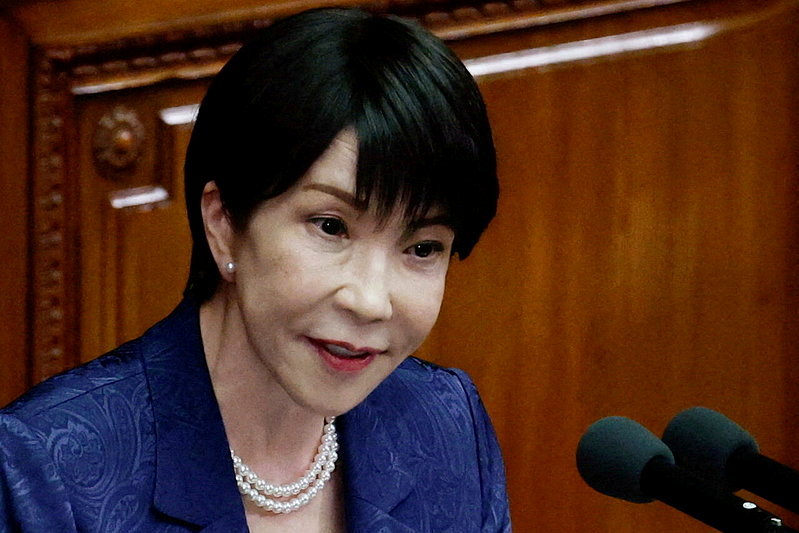
prime minister of japantakaichi sanae He strongly refuted the criticism that he should be responsible for the depreciation of the yen and the rise in interest rates. On the other hand, the Bank of Japan (Central bank ) President Kazuo Ueda said that strong global demand for AI has further increased the tightness of the labor market.inflation Under pressure, Japan’s underlying inflation rate is “very close” to the 2% target set by the central bank, indicating that the central bank should raise interest rates at an appropriate pace to avoid a sharp rise in bond yields.
Sanae Takaichi said in the Diet on Monday (19th): “So far, I have received a lot of criticism for saying that ‘the high market devalued the yen’ and ‘the high market raised interest rates.’ I categorically deny these allegations.”
Takaichi said his government aims to boost market confidence in the yen by building a strong economy and achieving fiscal stability. He said the government will appropriately control Japanese government bond issuance in the next fiscal year’s budget.
On the 19th, the yen-dollar exchange rate was almost stable at 158.09 yen.
The Gao municipal government has been in power for a full year and is currently trying to ease market concerns about fiscal governance. Earlier this year, the Japanese government’s draft annual economic policy guidelines raised concerns over how the government will finance planned food consumption tax cuts and increased defense spending. The market is concerned that the Gao city government is moving toward a more expansionary policy stance. This weakened the yen against the dollar and raised long-term government bond yields.
Bank of Japan President Kazuo Ueda, who accompanied Takaichi to the congress, said Japan’s underlying inflation rate is rising very close to the 2% target level set by the Bank of Japan. This is mainly due to rising raw material costs due to the conflict in the Middle East, as well as extremely strong global AI demand, boosting capital expenditure and export growth, further boosting inflation.
Ueda also said raising interest rates at an appropriate pace would help avoid a sharp rise in bond yields. He said: “With the underlying inflation rate gradually approaching 2% and financial conditions remaining loose, if the policy interest rate fails to adjust in time, the market may become worried about excessive inflation and increase concerns, which in turn will raise long-term interest rates.”
Ueda’s comments came as the Bank of Japan was scheduled to hold a monetary decision-making meeting on Oct. 30. The Bank of Japan raised interest rates in September, Reuters quoted sources as saying, and many within the bank are cautious about raising interest rates again this month, preferring to see more data first to assess the impact of previous interest rate hikes on financial conditions.
Most in the market expect the Bank of Japan to keep the policy rate unchanged at 1.25%, but may send a signal that it is likely to raise interest rates to 1.5% in early December.
In response to questions from opposition party members about the impact of fiscal spending on inflation, Ueda said increased spending could stimulate the economy, leading to price and wage growth. However, he also said that if increased fiscal spending could improve Japan’s supply capacity, it would help reduce inflation in the long run.
Summary FAQ
-
Takahiro strongly denied in Congress that the “high market devalued the yen” and “the high market drove up interest rates” and other claims, saying that the relevant criticisms were false. He stressed that the government aims to strengthen economic and fiscal stability and rebuild market confidence in the yen.
-
Ueda pointed out that Japan’s underlying inflation rate is very close to the 2% target, and strong demand for AI and the tight labor market are increasing inflation pressures. They believe that if there is no delay in adjusting policy interest rates, it could increase concerns about hyperinflation and push long-term interest rates higher.
-
Most people in the market expect the Bank of Japan to keep its policy interest rate unchanged at 1.25% this month. Since it raised interest rates in September, there is an internal tendency to wait for more data first. However, the Bank of Japan may remain open to raising interest rates to 1.5% in December.