
AI summary
Summary of article:
TSMC’s Kumamoto plant has brought population growth and financial strength, but it has also driven up traffic congestion, land prices and labor costs, making it difficult to determine the overall benefits of local investment in semiconductors.
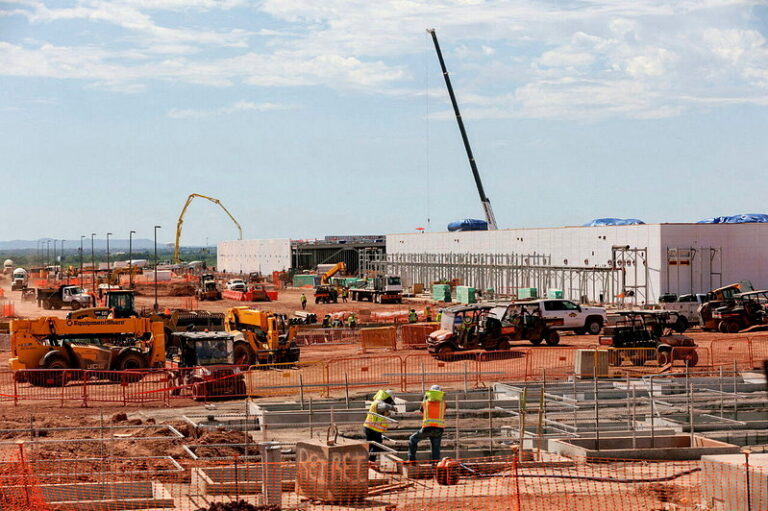
TSMC proceed furtherJapan Kumamoto It has been five years since the factory was established. Japan’s Yomiuri Shimbun went specifically to TSMC in Kikuyo Town, Kumamoto Prefecture, to report on the current situation. Local communities are feeling the benefits and pressures of the economic boom at the same time: population growth and local financial strength have also increased traffic congestion and labor shortages.
The semiconductor boom has fueled population growth and helped local governments maintain strong finances.
Japan’s census data released in September showed population growth in seven cities, towns and villages in Kumamoto Prefecture since 2020. Among them, Kosi town has seen the highest population growth with an increase of 2,542 people; Otsu Town and Kikuyo Town increased by 1,728 people and 1,195 people, respectively. Koshi is a satellite city of Kumamoto city. The expansion of TSMC has led more families with children to move to the city, and the population is expected to increase further.
In terms of fiscal advantage, in the Fiscal Strength Index ranking for fiscal year 2024, the three cities, towns and villages of Kikuyo, Otsu and Koshi all rank in the top of Kumamoto Prefecture. Kikuyo Town ranked first in the county with 0.95, and Otsu Town ranked second with 0.73. Kashi City ranked fourth behind Kumamoto City with 0.63. By fiscal year 2025, Kikuyo Town has reached financial self-sufficiency.
This index measures the soundness of local government fiscal revenues and expenditures. An index value of 1.0 means that local governments can maintain a balanced budget without relying on subsidies from the central government.
However, data from the Kyushu Local Development Bureau of the Ministry of Land, Infrastructure, Transport and Tourism showed that Kikuyo Town and neighboring Koshi Town and Otsu Town will have a total of 38 major traffic congestion hotspots in 2025. Compared with 2021, when TSMC first announced its entry plan, traffic congestion hotspots have increased by nearly 40%.
One of the main factors causing traffic congestion is the failure of road improvements and other infrastructure to keep up with the influx of new businesses. Since TSMC announced the establishment of a factory, as of the end of March this year, the Kumamoto Prefectural Government has signed company or factory location agreements with 71 semiconductor-related companies.
Kikuyo Town is currently undergoing a road widening project. City works department officials said commute times were also being staggered to improve traffic congestion.
The economic boom has also caused land prices near TSMC’s Kumamoto plant to rise, creating new challenges. In the five years to 2026, the average price of residential land in Kikuyo Town, Koshi City and Otsu Town is expected to increase by approximately 30% to 50%; The average price of commercial land has increased even more, reaching 1.3 times to 2.2 times.
According to a survey conducted by the Kumamoto Prefecture Federation of Chambers of Commerce and Industry in March, 88% of 489 companies surveyed said it is still unclear whether the impact of TSMC’s Kumamoto plant is positive or negative. Of the respondents, 9% said they had a positive impact, such as increased consumption of local accommodation and catering by Taiwanese and construction workers; Another 3% thought the impact was negative, including increasing personnel costs and labor shortages.
The Otsu Chamber of Commerce and Industry reported that local businesses have been forced to cease operations due to factors such as rising rents. There are also some workers who are attracted by high salaries and seek jobs in semiconductor companies. Small and medium-sized enterprises must strengthen their attractiveness to retain workers.
Summary FAQ
-
Since the establishment of the factory, semiconductor-related companies and people have been attracted to settle here, the population of Kikuyo Town, Otsu Town and Aishi City has increased, and local finances have also become stronger. Some cities, towns and villages have reached or are close to financial self-sufficiency.
-
The most obvious thing is the increase in traffic congestion. There will be 38 major traffic congestion hotspots across the three locations in 2025, an increase of nearly 40% compared to 2021. Furthermore, rising land prices and road improvements have not kept pace with the influx of enterprises, further increasing the burden of living.
-
The survey shows that most companies are still unable to assess the positive and negative impacts; Some people believe that this will increase accommodation and catering consumption, but some companies are under pressure from rising rents, wage competition and labor shortage and have even been forced to close.