

A coordinated global operation led by Interpol has resulted in the arrest of more than 3,700 suspected human traffickers and migrant smugglers, while thousands of potential victims were identified and protected across the world. The international law enforcement agency announced the results on Monday, calling the operation one of its most extensive efforts to combat organized trafficking networks in recent years.
The operation, known as Operation Liberterra III, was carried out between November 10 and November 21 and involved nearly 14,000 police officers operating across 119 countries. According to Interpol, the coordinated action led to 3,744 arrests, the safeguarding of 4,414 potential trafficking victims, and the detection of 12,992 individuals linked to illegal migration schemes.
Massive international effort targets trafficking networks
Interpol said the operation focused on dismantling criminal networks involved in human trafficking, migrant smuggling, and related exploitation. Authorities also launched at least 720 new investigations as a result of intelligence gathered during the operation.
The agency, headquartered in France and representing 196 member countries, emphasized that the scale of the operation highlights the growing complexity of global trafficking crimes.
“Criminal networks are constantly adapting,” Interpol Secretary General Valdecy Urquiza said in a statement. “They are exploiting new routes, digital platforms, and vulnerable populations. Understanding these evolving patterns allows law enforcement agencies to act earlier, disrupt operations more effectively, and better protect victims.”
Shifting trafficking routes and emerging patterns
Interpol noted a noticeable shift in trafficking trends uncovered during the operation. Investigators identified multiple cases involving South American and Asian victims being trafficked within Africa, marking a change from traditional patterns where African victims were primarily trafficked to other regions.
Authorities intercepted migrants attempting dangerous journeys along coastal routes near Senegal, Guinea-Bissau, Morocco, and Algeria, as well as overland trafficking networks operating in Peru, Brazil, and neighboring countries. These routes continue to pose serious risks, with traffickers exploiting desperation and false promises of employment or safe passage.
Major rescues reported in West and Central Africa
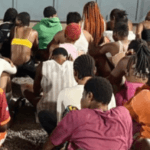
Law enforcement agencies in Benin, Burkina Faso, Côte d’Ivoire, Ghana, Senegal, and Sierra Leone reported significant breakthroughs during the operation. Combined efforts in these countries led to the rescue of more than 200 victims and the dismantling of several recruitment and exploitation hubs.
Interpol said many victims in Africa were lured through offers of overseas jobs. Once trapped, they were often charged excessive fees and forced into exploitative conditions. In some cases, victims were coerced into recruiting friends or family members in exchange for slightly improved treatment, creating a pyramid-style trafficking scheme that expanded criminal networks.
Cybercrime and forced labor operations uncovered
The agency also linked the findings to broader criminal activity. A separate cybercrime crackdown in Africa earlier in 2025 resulted in 1,209 arrests, targeting operations that collectively victimized nearly 88,000 people through online scams and fraud.
In Asia, Interpol revealed that authorities uncovered 450 workers during a single raid on a suspected trafficking compound in Myanmar, highlighting the scale of forced labor operations still active in the region.
Ongoing global challenge
Interpol stressed that while Operation Liberterra III delivered significant results, human trafficking and migrant smuggling remain persistent global threats. The agency called for continued international cooperation, intelligence sharing, and stronger protections for vulnerable populations.
“The fight against trafficking does not end with arrests,” Interpol said, adding that long-term solutions require prevention, victim support, and sustained enforcement efforts.