
AI summary
Summary of article:
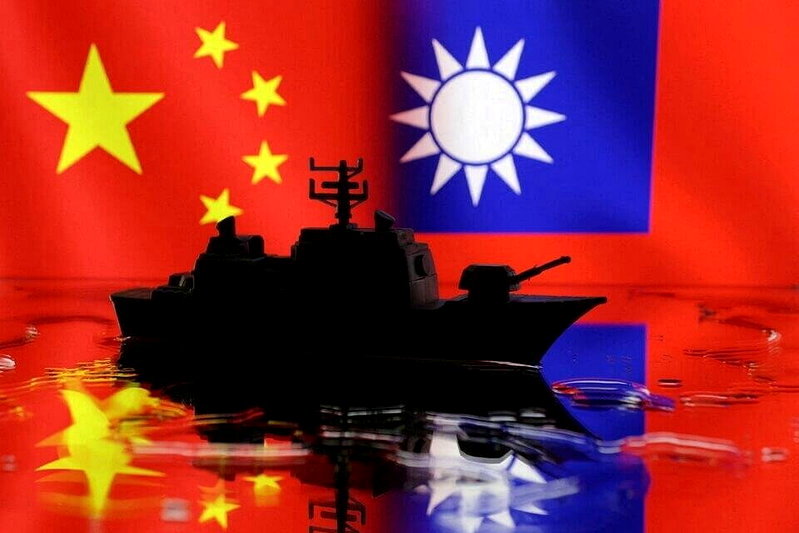
An American think tank has revealed that China has started undeclared military exercises around Taiwan. Taiwanese national security officials interpreted this as a combination of pre-APEC diplomatic avoidance, pre-election cognitive pressure, and military repression of the first island chain.
An American think tank revealed that China has recently conducted large-scale, unannounced “silent exercises” in the Western Pacific and around Taiwan. Taiwan national security personnel said that in front ofAPEC On the eve of the event, China intended to reduce diplomatic friction through silent exercises and used “military and dangerous atmosphere” to intimidate Taiwanese people into engaging in cognitive operations ahead of Taiwan’s 9-in-1 elections.
The Institute for War Studies (ISW) and the American Enterprise Institute (AEI) recently jointly authored “The China and Taiwan Update” report stating that China could conduct large-scale, unannounced military exercises to surround and isolate Taiwan; In early November, more than 100 PLA Navy and Chinese coast guard ships were converging in the western Pacific and engaging in “anti-access/area denial” (A2/AD) exercises.
National security analysts analyzed that this military activity, which was not code-named for exercise training, could be explained from three aspects. First, it is a dual calculation to exert pressure ahead of the Asia-Pacific Economic Cooperation Conference (APEC) and Taiwan’s nine-in-one elections. If military exercises against Taiwan are announced in a high-profile manner before APEC, it will inevitably trigger a strong reaction from the international community and weaken the diplomatic atmosphere of the summit. Therefore, adopting a “silent” mode can maintain military deterrence while maintaining room for diplomatic maneuver.
As for the pre-election pressure, national security sources said Beijing hopes to use the so-called “military and dangerous environment” to use military threats and intimidate the Taiwanese people. On the one hand, it wants to avoid high-profile military exercises that might cause resentment among the Taiwanese people. Not announcing military exercises is itself a kind of cognitive warfare, and it cooperates with Taiwan’s internal “war theory” operation to undermine the Taiwanese people’s confidence in self-defense.
The second is China’s “attempt to militarily suppress the entire first island chain through an encirclement script”. According to the analysis of national security personnel, looking at the actual deployment and exercise topics, this “scripted stage encirclement exercise” actually reflects Beijing’s true intention to systematically project theater-level power and military repression on the entire First Island Chain.
National security sources pointed out that the force sent by China this time has exceeded the scale of China’s military exercises against Taiwan at the end of last year, and has coordinated naval forces in the northern, eastern and southern theaters. Such mobilization goes beyond China’s needs to defend its homeland. It also shows that China has integrated fleets in different regions into a single high-seas combat mission, which has been verified in actual combat in a joint combat environment in the Western Pacific.
The Russian Pacific Fleet on October 28 test-fired a “Bulava” submarine-launched intercontinental ballistic missile from the Sea of Okhotsk, which crossed the Eurasian continent and reached Russia’s northwestern border, national security sources said. A few days later, China also tested submarine-launched intercontinental ballistic missiles, suggesting that China and Russia are working together to use cross-theater and long-range power and firepower projection to demonstrate to the United States and its allies the ability to break through geographical barriers and conduct strategic countermeasures in the vast Indo-Pacific theater.
Third, it is the first military-level strategic exercise at the Central Military Commission level since Chinese Communist Party leader Xi Jinping began a purge in the military, national security officials said. Because military-wide strategic exercises at the Central Military Commission level were suspended after the Chinese Communist Party removed the People’s Liberation Army’s top leadership last year, this is the first time it has been resumed.
Summary FAQ
-
The think tank believes China could conduct large-scale, unannounced military exercises to encircle and isolate Taiwan; Taiwan’s national security sources explain that it is a multi-pressure operation that combines diplomacy, elections and cognitive operations.
-
National security sources said that if a high-profile military exercise was announced before APEC, it would trigger a strong international reaction and damage the diplomatic environment domestically; Switching to silent mode allows deterrence to be maintained while maintaining room for diplomatic maneuver.
-
National security sources believe the scale of the exercises exceeds last year’s, and the integration of troops from multiple theaters shows Beijing is validating its long-sea joint operations capabilities and also reflects its systematic military suppression of the first island chain.