
AI summary
Summary of article:
Scholars pointed out that if Huang Renxun’s extramarital affair involves Chinese spies, the focus is not only on the leakage of secrets, but also on the possibility of Huida’s sales influencing China and the United States’ national security decisions, which highlights that the power of Silicon Valley exceeds traditional lines of defense.
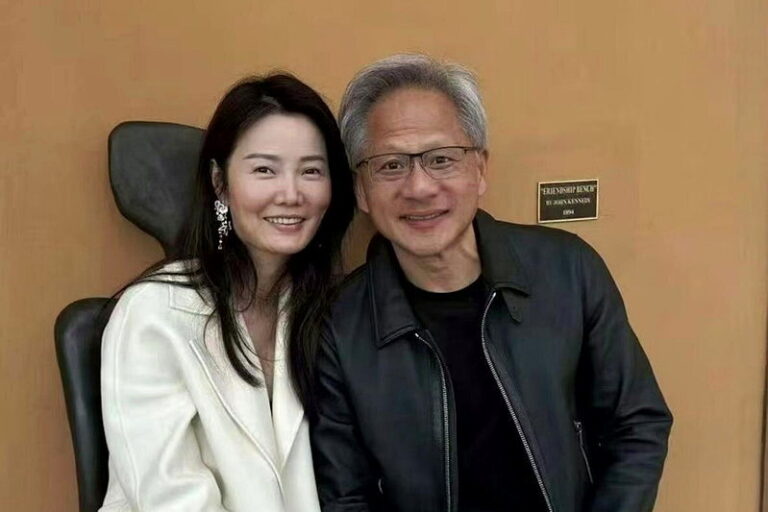
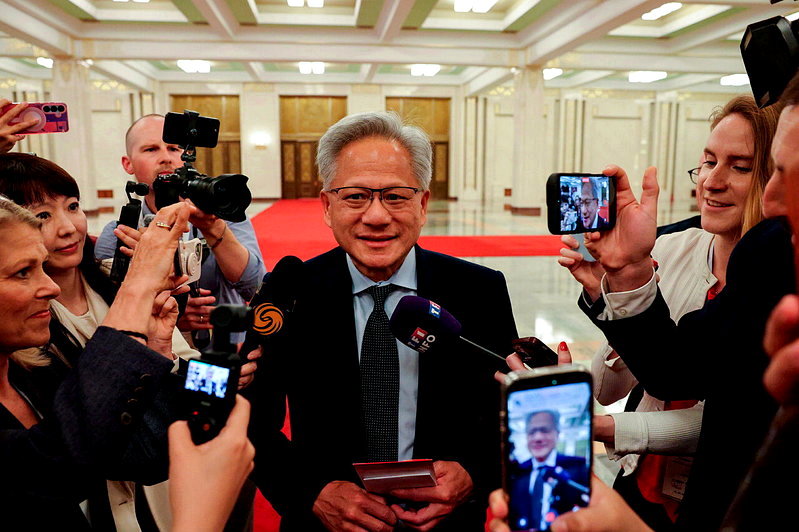
CEO of NvidiaJen-Hsun Huang On the 8th, he admitted to having an extramarital affair. According to the New York Times, the US intelligence agency determined that the partner of her extramarital affair, Huang Le, was a member of Mainland China’s Ministry of State Security.detective This news shocked the market and regulatory agencies. Corey Alpert, a scholar who served in the Biden administration, wrote in the Interpreter, the magazine of the Australian think tank Lowy Institute, that the incident highlights a new contradiction in the relationship between Washington and Silicon Valley: Senior executives of private companies have more power than ever, but the agencies responsible for maintaining US national security have not yet understood this change.
Abbott is now a doctoral researcher at the University of Melbourne, specializing in the impact of AI on democratic systems. He once served in the Biden administration and said in the article that the main danger of the Huang Zhen-hsun incident is not that China has specific confidential information, but that it can use it to influence Huida’s stance on selling AI chips to China. In addition to protecting sensitive information, national security agencies are also responsible for protecting government decision makers from outside influence. However, the leaders of large American technology companies are gradually becoming key figures in the power structure capable of influencing US national security policy.
Senior executives at Silicon Valley companies are taking the initiative to shape US national security interests rather than simply providing essential products and services for the government, thereby influencing how the world views American power. When Tesla CEO Musk banned Ukrainian troops from using Starlink services, there was speculation whether it was Musk or Trump who authorized the restrictions. The question itself highlights that major decisions related to national security may already be made by the government or private enterprises.
Abbott believes that senior Silicon Valley officials who control technologies used by the military and intelligence agencies, even if they do not have access to classified information, can still determine how these technologies operate, and can even alter the country’s operational capabilities or what technologies hostile forces can obtain. These companies have close ties to the Trump administration and are at the forefront of what the Trump administration defines as American power. The impact of their actions is more important than that of the entire government.
Governments around the world have increasing reason to view people like Huang as geopolitical players. This scandal shows that counter-intelligence agencies have to face this reality. The FBI, the main US counterintelligence agency, has taken some measures to protect private industry, but as the public role played by senior technology executives changes, counterintelligence defense is also facing new challenges.
In addition to how to protect celebrities like Jen-Hsun Huang from foreign intelligence activities, the relationship between corporate executives and politicians is also an issue. US President Trump was informed about Huang’s extramarital affair long before the incident was exposed, and the intelligence community assessed that the person with whom she had an extramarital affair was related to Chinese intelligence agencies. Even after receiving the relevant briefings, Trump continued to communicate with Huang and publicly defended him after the scandal was exposed.
The article states that Trump could have forced Huang Renxun to step down, but he did not do so because it would alienate an important political ally and Huang Renxun is also a key figure in Trump’s strategic competition with China. Huang’s support for the “Make America Great Again” (MAGA) movement also helps Trump build a political and economic support base in Silicon Valley.
Trump did not act based on intelligence received by the US intelligence community because he believed Huang was invincible. It also highlights that even though counterintelligence agencies can respond to changing circumstances, their professional judgments can still be overruled by political leaders based on political considerations. These new security vulnerabilities will not be limited to the United States, but will be significant for all countries whose private and public sectors depend on American technology.
The article ends by pointing out that the new generation of American leaders who are gradually coming to the center must confront the seemingly unstoppable power that has accumulated in Silicon Valley in the Trump era. Part of the intense dissatisfaction expressed by American voters in the midterm elections also stems from the backlash against this group of technology industry leaders. In the future, when new generations of leaders from both parties take power, they will have to reconsider the scope of national security, including counter-intelligence work, and take into account the public power currently held by private enterprises and individuals.
Summary FAQ
-
The article believes that the real risk is not that China has obtained specific secrets, but that it may affect Huang Renxun and Huida’s stance on China’s sales of AI chips through their private lives and interpersonal relationships, thereby affecting US technology and national security policies.
-
Because these officials not only supply government products, but can directly determine how key technologies work, who can use them, and how American power is perceived by the outside world, their influence may even equate to government actions.
-
Although Trump has received intelligence briefings, he continues to communicate with Huang and publicly defend him, suggesting that even if counterintelligence agencies make professional decisions, political leaders may choose not to adopt them due to considerations of allies and interests.