
AI summary
Summary of article:
The EU’s information security chief said the hacking of a supermarket refrigerator shows that the dangers of the Internet of Things have increased. In the future, home appliances, routers, etc. may become the target of attacks, and called on Europe to increase information security investments and protection.
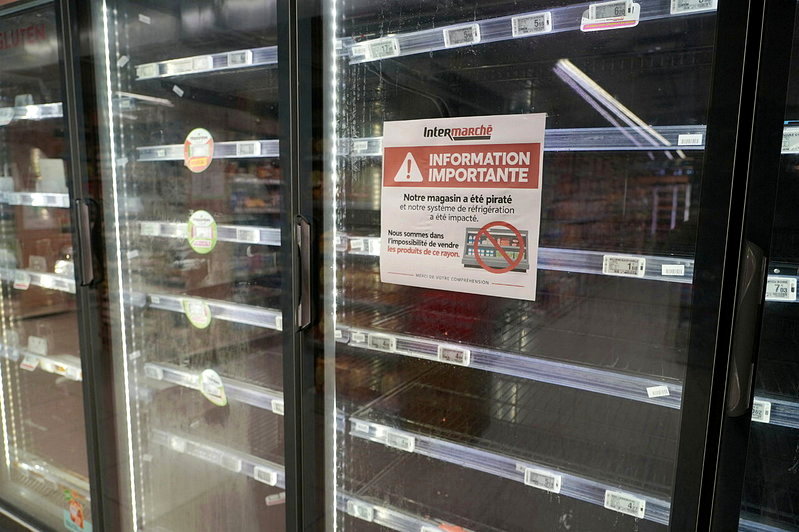
After supermarket refrigeration equipment was recently attacked by cyber attacks,European Union Home appliances could be the next target, the cyber security chief warned today, urging Europe to invest more money to tackle increasingly serious cyber threats.
Agence France-Presse reported that between October and November this year, supermarkets in at least 12 European countries were hit by cyberattacks, with France most severely affected.
Juhan Lepasser, Managing Director of the European Union Internet Security Agency (ENISA), said: “Information security should never and cannot be addressed after the fact. Today it is the refrigerator, tomorrow it may be the router, and the day after tomorrow it may be the turn of various home appliances, etc.”
The Athens-based EU Cybersecurity Agency released its latest biennial report on the current state of EU cybersecurity in Brussels. In an interview with AFP locally, Le Passard called on manufacturers to implement security design during product development. “Virtually all accidents are avoidable. The question is, are we willing to invest in it? Cybersecurity is expensive.”
Le Passard said security is important because “as a citizen, as an individual, any service you rely on has a digital element, and as long as it has a piece of code that’s not protected, it can be hacked.”
He said the worst-case scenario would be the loss of services on which daily life depends, “such as police not being able to reach out, not being able to dispatch the fire brigade, not being able to operate a hospital, or public transport not being able to take you to your destination.”
“These are services we rely on for normal life and must work around the clock. Once these services no longer function properly, we will be immediately impacted.”
Hundreds of French supermarkets were hit by cyberattacks on 11 and 12 October, causing refrigerator and freezer temperatures in stores to rise, forcing many stores to discard all perishable food stock.
The French government determined on the 9th that the Iranian Revolutionary Guard Corps (IRGC) was responsible for the cyberattack on the supermarket.
Le Passard did not comment directly on France’s allegations, but noted that pro-Iranian and Russian officials are known “state-level actors” who continue to target Europe for attacks and who “cooperate greatly” with each other.
“China, Iran and North Korea have many state-backed operational threat actors and they target European companies and European interests,” Lepasard said.
He welcomed EU information security rules that will come into full effect next year, as well as the EU’s plan to “double the size and resources of ENISA” as a good start, and said that relevant measures are “never too many.”
Summary FAQ
-
Since there have been successive attacks on supermarket refrigeration equipment recently, it shows that the vulnerabilities of daily Internet-connected equipment are increasing; They believe that refrigerators, routers and various home appliances could be targeted by hackers.
-
Supermarkets in at least 12 European countries were attacked from October to November this year, with France being the most affected. Some stores’ refrigerators and freezers overheated, forcing them to discard large quantities of perishable items.
-
Lepasard called for moving security design into the product development phase and emphasized that information security investments cannot be addressed after the fact; He also confirmed that the EU will strengthen rules and expand ENISA resources.