
AI summary
Summary of article:
This year’s flu season has started early, H1N1 has replaced the originally predicted H3N2 as the mainstream, and hospitalized cases are rising rapidly. Vaccines may still provide protection, and people can choose traditional, mRNA or nasal spray vaccines depending on age and needs.
Everyoneinfluenza Seasons vary, some come early, some come late, some have mild symptoms and some are similar to last year.Tornado Like an attack. Each year, scientists predict which flu viruses will come to the United States based on data from countries in the Southern Hemisphere where flu season starts earlier. The key word is “prediction”. Because flu viruses mutate rapidly, scientists can’t be 100% certain that a virus that ravaged Australia will also affect the United States, and that’s exactly what happened during past flu seasons and this year.
The Men’s Health website reported that a few weeks ago, scientists predicted that H3N2, also known as “Super K”, would become the dominant influenza strain in the United States; However, early monitoring of influenza cases in the West Coast found that another subtype of influenza A virus, H1N1, had replaced H3N2 as the dominant influenza strain in October. New data from the Centers for Disease Control and Prevention (CDC) shows that the number of flu-related hospitalizations is rising rapidly.
The CDC survey found that as of mid-October this year, the number of influenza hospitalizations was 10 times higher than in 2025, at 2.1 hospitalizations per 100,000 people, compared with 0.2 hospitalizations per 100,000 people during the same period last year.
Other changes include when and where the virus spreads. While flu cases typically begin to rise in the fall, this year infections began rising as early as August. The initial increase in cases was concentrated on the West Coast, including Arizona, Nevada, and California, while Hawaii and Louisiana were at moderate epidemic levels; U.S. Flu season typically starts in the South.
Overall, flu activity remained at low levels across the country, but as of October 28, the CDC estimated that infections were increasing or likely to increase in 39 states; These figures are consistent with early reports of increased flu activity in East Coast states, including Pennsylvania and New York.
Although scientists initially predicted that the “Super K” influenza strain would become dominant, this year’s vaccine includes the H1N1, B/Victoria lineage, and H3N2 strains. It is not yet certain whether the vaccine can completely protect against the mutated H1N1 strains, but it is still expected to provide some degree of protection.
Andrew Pecos, a virologist at Johns Hopkins University, said antigen mismatch is not black and white, and people may have low immunity rather than no immunity at all. For example, last year, even people who got an antigen-mismatched flu vaccine were still less likely to develop severe illness and be hospitalized than people who were not vaccinated.
In addition to traditional influenza vaccines, adults age 50 and older can also receive a new influenza vaccine called mFLUSIVA, which is made using the same mRNA technology as the new coronavirus vaccine. Phase 3 clinical trials of the vaccine found that it was more effective than standard vaccines at preventing disease caused by influenza A and B viruses; The current dominant influenza strain is influenza A H1N1 subtype.
During last year’s flu season, only 411 of 20,179 people who received the new vaccine had confirmed cases of flu within 14 days (2%), compared with 557 (2.8%) of 20,124 people who received the standard vaccine.
However, it is worth noting that the potential for side effects is higher with the new influenza vaccine. In clinical trials, subjects reported more symptoms such as pain at the injection site, fatigue, headache, and muscle weakness.
If you don’t want to get the shot and you’re between 2 and 49 years old, you can also choose the nasal spray flu vaccine FluMist. John Sellick, professor of internal medicine at the University at Buffalo, explained that as we age, the immune response in the nasal cavity weakens, meaning the nasal spray vaccine is less effective in older people.
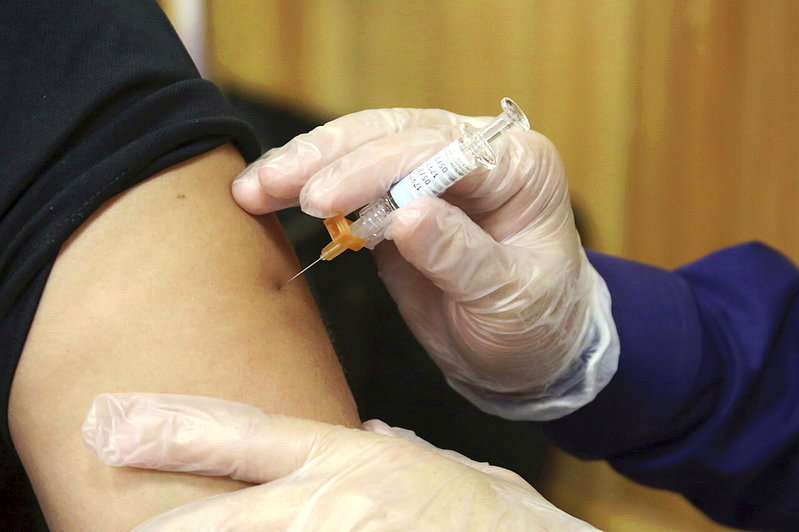
In short, there is still time to prepare for flu season. Although the virus spreads rapidly and mutates easily, vaccination remains the best option to address this challenge.