
AI summary
Summary of article:
The Bohemian Paradise Geopark in the Czech Republic was expelled from the UNESCO Global Geoparks Council for failing to resolve a dispute over the sale of gems of unknown origin, and will lose its certification later this year.
The Bohemian Paradise Geopark in the Czech Republic, known for its unique rocky landscapes, will lose its ownership from 2015 at the end of this year.united nations UNESCO Global Geopark Certification. The Geopark failed to convince UNESCO’s Board of Directors that the dispute over the sale of gems of unknown origin was properly resolved, and so it was removed.
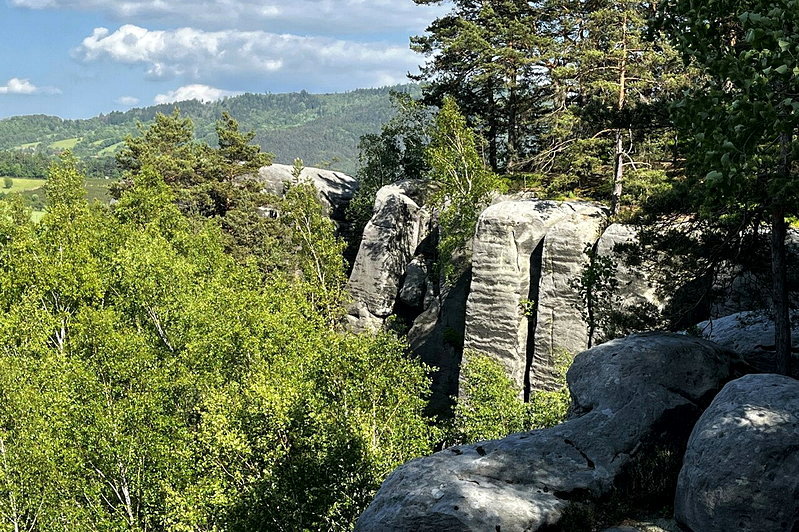
The Bohemian Paradise Geopark (Geopark Cesky Raj) is located in the northeastern part of the Czech Republic. It has spectacular sandstone cliffs, ancient volcanoes, gem deposits, caves and historical monuments, covering an area of 833 square kilometers.
Due to its extremely precious natural and landscape value, the area was included in the European Geopark Network in 2005, and in 2015 it became the only geopark in the Czech Republic included in the UNESCO Global Geopark Network.
The UNESCO Global Geoparks Council decided to delist the Bohemian Paradise in the Czech Republic at a meeting on the 3rd, the Czech News Agency (CTK) reported.
Bohemian Paradise received a “yellow card” from UNESCO in 2024, requiring it to end cooperation with organizations selling gems of unknown origin and giving it two years to resolve related issues.
According to some sources, the local Turnov Museum sells such gems, but the museum has repeatedly denied this. The Bohemian Paradise Geopark’s decision to end its partnership with the museum was not approved by the Global Geoparks Council.
Jana Lebedova, director of the Bohemian Paradise Geopark, said: “The ideal situation for them is that we can force the museum to stop selling such gems. They are also concerned about another thing: although these sales are in compliance with Czech law, the raw stones sold locally do not even come from our geopark. Therefore, from their point of view, the problem is more serious, because these raw materials are imported from outside.”
Lebedova was disappointed by the council’s decision. She said that although the Geopark was not involved in the relevant sales activities and had proven that there was no cooperative relationship between the two parties and cooperation was impossible, it still failed to change the council’s decision.
Lebedova said, “Maybe they are looking at this case based on past records. We have received yellow cards for this problem more than once, but we have never been able to solve it completely, so this time they decided to give us a straight red card.”
Summary FAQ
-
The main reason is that Park failed to convince UNESCO’s Board of Directors that it had properly handled the controversy over the sale and cooperation of gems of unknown origin. The Board of Directors believed that the relevant issues had not been fully addressed and therefore decided to delist it.
-
It received a “yellow card” from UNESCO in 2024 and was asked to end cooperation with institutions selling gems of unknown origin. It was given two years to improve, but ultimately failed to pass council review.
-
Director Lebedova expressed great disappointment, emphasizing that the Geopark was not involved in the relevant sale and that it had proven that there was no cooperative relationship with the museum involved. However, these clarifications did not change UNESCO’s decision.