
AI summary
Summary of article:
The New York Times revealed that many of the Chinese companies approved to handle Huida H200 chips were suspected of being empty shells or related to the military, raising questions about whether the United States’ review of chip sales was accurate.
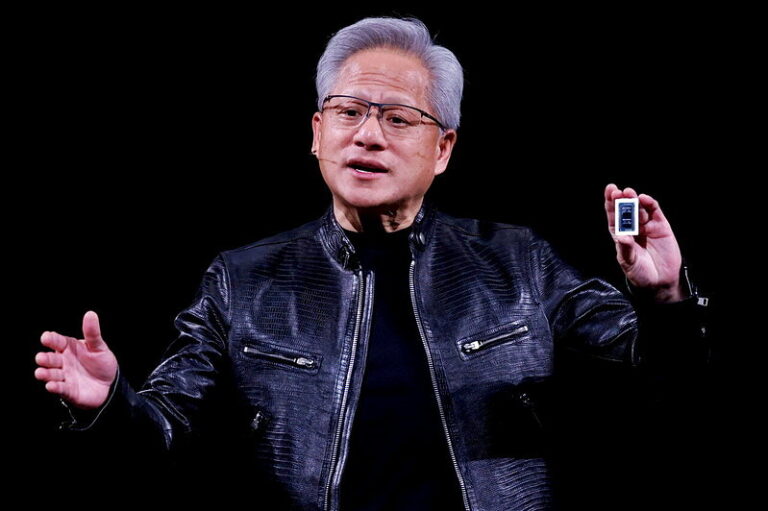
CEO of NvidiaJen-Hsun Huang Recently it was revealed that he was suspected of having an affair with a Chinese woman.detective Huang Le is dating, and now Huida’s chip sales have aroused even more suspicion. An on-site investigation by The New York Times found that the addresses of Chinese companies approved by the US Commerce Department to handle H200 chips were registered to vacant offices and were suspected of being shell companies. Some of the sanctioned companies also belong to companies on the US trade blacklist or to Chinese military contractors, raising questions about who is really behind these companies and whether the US national security review is authentic.
The New York Times cited a senior Trump administration memo on the 6th and revealed that Huang Le, a Chinese senior executive of the Singapore company MegaSpeed, was identified by US intelligence officials as a Chinese intelligence agent. In addition to gathering relevant intelligence about Huang Zhen-hsun, his job may also be to try to influence Huida’s position on China’s chip export policy, thereby prompting the company to attempt to enter the Chinese market for the most advanced AI chips. The Financial Times also reported that Huang Renxun dated Huang Le.
According to people familiar with the matter, the US Commerce Department this year has approved about 24 Chinese companies to buy Huida H200 chips or assemble the chips into AI servers, including Baidu, BYD and Tesla Shanghai. Each company has been given approval to purchase thousands of chips. These companies must first undergo national security review, but an investigation by The New York Times found that the actual operations of some companies and the relationships behind them are full of suspicions.
Among them, New Matrix, which was founded only 17 months ago, was granted permission to assemble the H200 into an AI computer for customers. A New York Times reporter visited the company’s registered address in an industrial park in the northwestern suburbs of Beijing. The site was an empty brown building with wires hanging from the ceiling and no lamps installed yet. There is no such company in the building’s business directory, and the park’s property management staff also said there are no records.
As of November 6, New Matrix’s official website did not list employee names, hiring information, or company history. Corporate information shows that the two major shareholders belong to Chinese private equity firm Wise Road Capital (Wise Road) and its founder Li Bin. Wisdom Capital was blacklisted by the United States in 2024 for assisting the Chinese government in acquiring companies that master strategically sensitive chip technology. The two analysts believe New Matrix could be the frontrunner for the respective companies.
The situation with Maginfra, another company approved to handle the H200, is similar. A New York Times reporter visiting his registered address in September found a few tables and chairs in a closed room with no signboard. People present on the same floor said that they never saw anyone using it. Analysts believe that Maginfra may originate from Inspur, which was added to the entity list by the United States due to its cooperation with the Chinese military. The two parties have overlapping personnel and patents, and both parties also own government shares.
Other approved businesses are also related to military suppliers. Zhejiang Yindun Cloud Technology has a close relationship with Range Intelligent Computing Technology Group. The latter has provided services to military contractors and also provided cloud computing services for satellite projects led by the Hebei Provincial Defense Authority. In 2016, it established a subsidiary to develop quantum communications business for the Chinese government and military.
In addition, Shanghai Jiatang is derived from Datang Telecom, which provides technology to the Chinese military. Its holding organization has also developed encryption technology for the military.
Lisa Tobin, former China Affairs Director of the White House National Security Council, raised questions that the Commerce Department and HUIDA may not have done the due diligence to ensure that the license terms were complied with. The US Department of Commerce’s Bureau of Industry and Security insisted that all applications undergo careful national security review.
Huida said it is unreasonable for the Chinese military to rely on American technology, and limited sales of the H200 can still support American employment and manufacturing. The above-mentioned companies involved did not respond for comment.
Summary FAQ
-
The New York Times named New Matrix, Maginfra and other companies whose registered addresses are suspected to be empty, and some companies are related to blacklisted companies, military contractors or government-backed capital, indicating that the actual controller and use are still opaque.
-
Because it has only been established for 17 months, its registered address is a gray vacant house, and no obvious traces of operation can be found on the park or official website; Its shareholders are related to Jhiloo Capital, which has been blacklisted by the United States, raising suspicions.
-
The US Department of Commerce’s Bureau of Industry and Security insisted that all applications undergo careful national security review; Huida said that limited sales of the H200 can support American employment and manufacturing, and it is unreasonable for the Chinese military to rely on American technology.