
AI summary
Summary of article:
The New York Times reported that if the US-China-Russia summit takes place in Shenzhen, it may allow Xi Jinping to demonstrate his status as a great power, but it will also put Beijing in a dilemma and embarrassment over Ukraine and nuclear weapons issues.
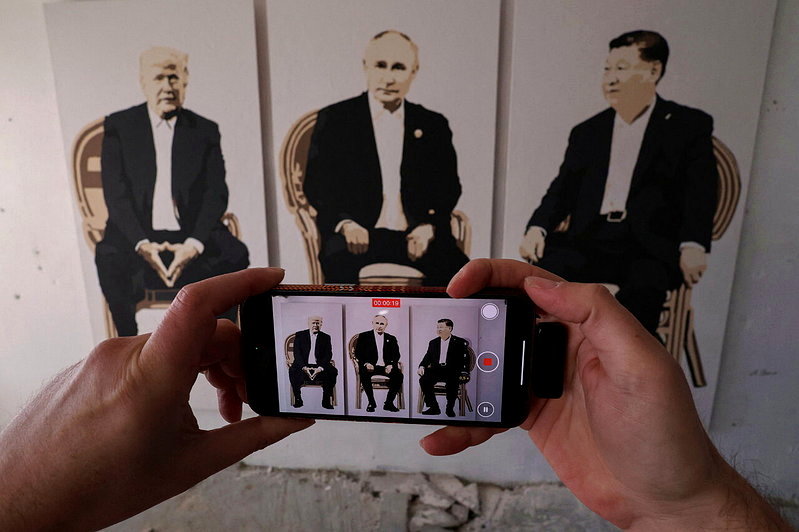
The heads of state of the United States, China and Russia are likely to meet during the APEC summit in Shenzhen. A New York Times analysis reported that China has a negative perception of the secret Yalta treaty and that the talks may include the Ukrainian war and nuclear weapons issues. Chinese PresidentXi Jinping Caught in an embarrassing situation.
China confirmed on the 4th that it is negotiating with Russia and the United States a meeting between the leaders of the three countries. This meeting may take place during the Asia-Pacific Economic Cooperation (APEC) economic leaders’ meeting to be held in Shenzhen, China from 18th to 19th.
Analysts said the summit could enhance Xi Jinping’s status. But negotiations over the future of Ukraine and limits on nuclear weapons pose a difficult choice for China. Another difficulty is China’s negative perception of the Yalta Treaty.
(United States of America In early 1945 the leaders of the Soviet Union and the United Kingdom met in Yalta and reached a secret agreement granting Moscow special privileges in China in exchange for the Soviet Union’s participation in the war against Japan. But China did not participate in the talks. “This is a historic lesson in great power politics that China will never forget,” said Xin Qiang, an expert on China-US issues at Fudan University in Shanghai.
Analysts said the meeting could strengthen China’s ambition to become an indispensable global power on equal footing with the United States, but it could also repeat the historical mistakes of Beijing’s claim to oppose great power play. Russia’s idea of hosting the meeting has raised concerns in Ukraine.
China is unwilling to provide a platform for Russia and the United States to reach agreement on the Ukrainian issue. To do so would be contrary to Beijing’s position that peace talks require the participation of Ukraine and Europe.
German President Frank-Walter Steinmeier, who had visited Beijing earlier, told German media that when he met Xi Jinping, Xi Jinping made it clear that the United States, Russia and China would not discuss the fate of Ukraine in Shenzhen.
Steinmeier said, “You could see the irritation on his face. He even asked where these rumors came from.” “He made clear that this was a European conflict and that Europeans had to be included in the negotiations.”
It is reported that Beijing is not ready to even discuss the issue of nuclear weapons. The last nuclear arms control treaty between the United States and Russia expired in February this year. But for Beijing, the matter is off the table for now. Under Xi Jinping, China has abandoned its decades-old strategy of maintaining a “minimum deterrent” nuclear arsenal. China is amassing a nuclear arsenal that rivals Washington and Moscow and has refused to limit its development.
Last month, when asked whether China agreed to discuss denuclearization with the United States and Russia in Shenzhen, Chinese Foreign Ministry spokesman Mao Ning said primary responsibility for disarmament rested with Washington and that requiring China to participate in denuclearization talks was “unreasonable, unreasonable and unrealistic.”
However, Zhao Long, a security expert at the Shanghai Institute of International Studies, said China may be willing to negotiate to reduce the risk of nuclear conflict. This could include improving communication channels during crises and ensuring that countries maintain human control over nuclear decision-making even in the age of artificial intelligence (AI).
In the eyes of many Western officials, China plays a key role in influencing Moscow because Russia is highly dependent on Beijing diplomatically and economically. But for Beijing, China has nothing to do with a conflict it neither started nor provided military support for.
Some Chinese analysts believe the best thing for Beijing to do is to cooperate in the talks, while avoiding giving the impression that it can pressure the Kremlin.
Summary FAQ
-
China has confirmed that it is in talks with the United States and Russia. This meeting between the leaders of the three countries can take place during the APEC economic leaders meeting to be held in Shenzhen from 18th to 19th. At that time, the outside world will pay close attention to the direction of the peak.
-
Because the talks may include discussion of the war in Ukraine and nuclear weapons sanctions, these issues make Beijing reluctant to be seen as supporting talks between the United States and Russia. At the same time, China’s historical memory of the Secret Treaty of Yalta also makes it particularly sensitive to private deals between major powers.
-
Beijing hopes to maintain its image as an indispensable major power, but it is unwilling to provide a platform for the United States and Russia to reach agreement on Ukraine, nor is it willing to openly discuss denuclearization; If it participates, it prefers to focus on reducing the risk of nuclear conflict and communications mechanisms.