
AI summary
Summary of article:
Following the Democratic Party’s victory in the midterm elections, the market focused not only on semiconductor reforms, but also on the U.S.-Iran conflict, oil price risk premium and subsequent U.S. Also focused on changes in long-term bond interest rates, gold, Bitcoin and other assets.
The Democratic Party’s performance in the midterm elections was surprisingly strong. As expected, the blue tsunami hit semiconductor stocks that had previously benefited from the artificial intelligence (AI) data center construction boom. However,oil price The recent decline has been unexpectedly violent. Experts say the outcome of the US election is certain, but it still leaves three major unanswered questions in global financial markets.
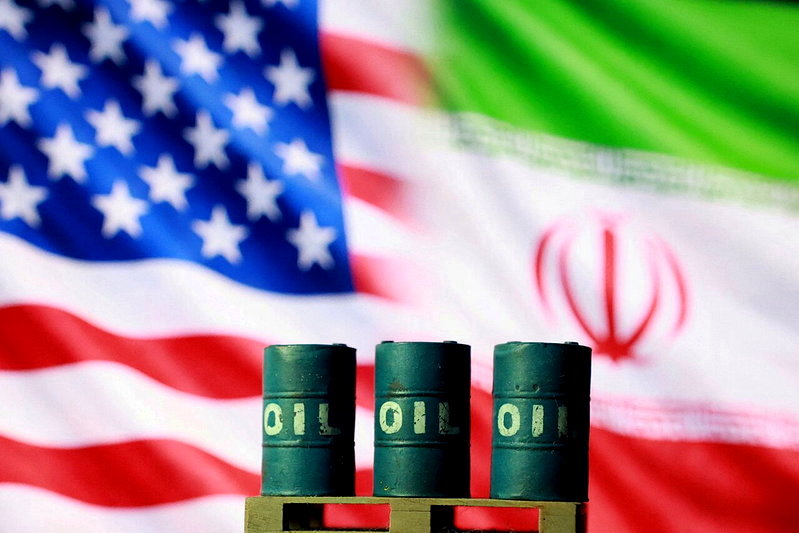
The most serious issue after the election is that of the President of the United States after the crushing defeat of the Republican Party.trump will givemei yi Even if the war cools down, the conflict will still escalate. This is important for whether the recent decline in oil prices will continue and whether oil prices will affect global asset markets. Oil prices fell this week, reflecting the beginning of the end of the US-Iran war and the momentum of the decline fueled by the Democratic Party’s victory. The price of Brent crude oil fell by more than 8% on the 4th and fell below US$100 per barrel. On the 5th, it fell 0.6% to US$94.08 per barrel.
Brooks, a senior fellow at the Brookings Institution and former chief economist of the Institute of International Finance (IIF), pointed out that after the blue tsunami, three issues deserve attention:
Trump likes to change focus, often making a lot of news and suddenly changing course. One way is to resume the bombing campaign against Iran that has been suspended since April. Another related issue is the risk premium inherent in oil prices. Brooks believes premiums have become too high recently. The recent decline in oil prices once again reminds investors of the fact that the reason why oil prices have been trending higher until last week has nothing to do with oil supply from the Middle East or demand from mainland China. This fully reflects the risk premium factors, and the risk premium will rise and fall rapidly as the market environment changes.
This year, financial market trends have changed almost exclusively with the rise and fall of oil prices, from French government bonds to dollar devaluation trades. From the perspective of the decline in Brent prices, the risk premium has declined sharply, which shows that the market expects the end of the US-Iran war.
A major focus of debate in the market is whether aggressive debt issuance by hyperscalers to finance AI infrastructure is a major force in pushing up long-term US government bond yields. Brooks is skeptical of this statement and believes that the expanding US budget deficit, now at 6.5% of gross domestic product (GDP), is the main reason for rising yields. And if Democrats control both houses of Congress, will the already out-of-control US fiscal deficit become more manageable? No one should be too optimistic about this.
As soon as the midterm elections are over, the fight for the US presidency will begin in two years. However, fiscal discipline will likely not be the main campaign issue of either party. This can be seen from the fact that the 10-year US Treasury yield futures have remained almost unchanged after the midterm elections.
After the election, the price of gold rose sharply by 3.0%, the price of silver rose by 4.6%, and the price of silver also rose by 3.3%. It’s difficult to attribute the precious metals’ bullish resurgence entirely to a “blue wave.” It may also be related to the sharp decline in oil prices which lifted the precious metals market. Let’s look at another signal, which is that Bitcoin increased by a slight 0.5% after the election. The unfavorable outlook for the cryptocurrency’s prospects is still rising under the circumstances when the Democratic Party controls Congress.
Brooks determined that this could be a turning point for the “debasement trade” trend. Unless the United States and Iran resume a “hot war”, that is another matter.
Summary FAQ
-
Because Trump could focus on resuming pressure on Iran if the conflict cools down, the geopolitical risk premium of oil prices will continue to decline; Conversely, if it increases, oil prices and global asset prices may be affected again.
-
The main reason for the short-term decline of Brent crude oil is not a sudden change in the fundamentals of supply and demand, but rather the market believes that the risk of escalating war in the Middle East has diminished. The risk premium that was previously elevated has declined sharply, indicating that investors are beginning to bet on the possibility of the war ending.
-
The article points out that the expansion of the US deficit is the main reason for the rise in long-term bond yields, and may not improve if the Democratic Party takes power; Additionally, the rise in gold, silver, and Bitcoin may represent a return to depreciation transactions, reflecting market skepticism about the US dollar and the fiscal outlook.