
AI summary
Summary of article:
“The Golden Hairpin” ended with Wei Rao becoming the ruler of the Princess Guard, sparking discussion. Tian Ziwei’s acting skills were recognized, but the later part also attracted controversy due to the compressed pace, the tragedy of the supporting characters, and the hasty ending of the plot.
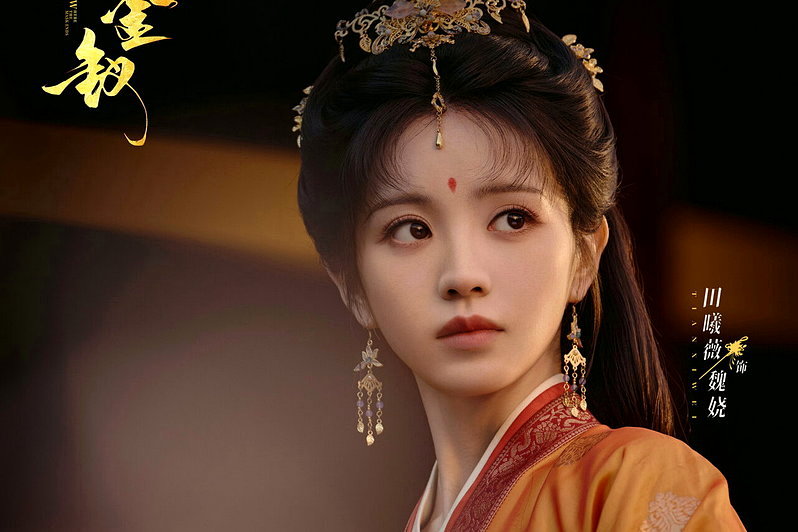
The ancient puppet drama “The Golden Hairpin” ended on November 3 through advance on-demand broadcasting. The play departs from the traditional fixed template of “an ideal marriage” and “the destination of a woman bound by love”. It has an open ending in which the heroine Wei Rao is relieved of her status as the prince’s wife and becomes an independent ruler as the princess protector. The ending left many netizens wondering, “Is this a foreshadowing for the second season?” Facing the end, Tian Ziwei alsoweibo He said, “Slow down and watch! Oh, I can’t bear to be apart from you.”
In the finale, Liu Shuo, who had been on the throne for only three years, was killed by Prince Fu. The mute girl Hongxian stabilized the court with her posthumous son, while Wei Rao decided to reconcile with Lu Zhuo and move towards the center of power at Xuanzheng Palace alone. At the same time, Wei Rao and her biological mother Zhou Fu exchanged jade seals for their protection and the mother and daughter were reconciled. The evolution line from the girl with the scent of the night to the man in power has been called “the light of female videos in recent years” by some viewers.
Tian Ziwei’s performance in playing two roles in the drama also received praise. He distinguished the roles of Wei Rao and Jun Dai with his voice, eyes and body posture. The veteran drama’s zero negative reviews also support the series’ image. In particular, Wang Yinan, who plays Guo Yufeng, is said to “support the villain pattern of the entire play.”
However, in the end it also raised a lot of criticism and doubts about the high price and low price. The audience pointed out that the pace of the last two episodes was severely compressed, Liu Shuo suddenly went offline, the red line depended on a posthumous return, and many branch lines were hastily ended. He was charged with clear indications of “conspiracy murder” and that the plot lines were “fraudulent”.
Additionally, emotional scenes between the male and female protagonists were heavily edited, resulting in sudden changes. Furthermore, the tragic endings of supporting characters such as Baitao’s death while blocking an arrow to save Wei Rao, Qi Zhongkai’s fall into a loveless marriage, and Hongxian’s relationship with the stranger Death Soldier Xiao beyond the palace wall led many viewers to question whether the flesh and blood of the supporting characters were sacrificed to enhance the heroine’s aura.
Some netizens said, “This drama has a good selection of supporting actors”, “At first it felt like everyone’s IQ was on the line”, “This drama went crazy after Jun Dai’s death”.
The official blog of “Marrying the Golden Hairpin” announced on the 4th that the series has become the top 1 drama with a popularity of 10,000+ days. The characters Wei Rao and Jun Dai, played by Tian Ziwei, have received over 100 million hits on Youku.com.
Summary FAQ
-
Because the series did not follow the traditional route of a consummated marriage, instead ending with Wei Rao as only the protector princess and ruler, it created a feeling of an open ending and had many viewers speculating whether it was paving the way for a second season.
-
She plays the two roles of Wei Rao and Jun Dai. She uses the differences in voice, eyes, and body to expand the layers of the characters, making the audience feel the obvious difference. He is also considered to support the development line of the protagonist and the movement of the group picture.
-
Criticisms focused on the overly compressed pace of the last two episodes, Liu Shuo’s sudden exit, the posthumous return of the Red Line with the baby, and the hasty conclusion of several branch lines. He also questioned the excessive sacrifice of supporting characters in the plot to highlight the aura of the heroine.