
AI summary
Summary of article:
After the Democratic Party won the midterm elections, the market was worried that AI infrastructure and semiconductor regulation would be hindered, and funds were withdrawn from Asian chip stocks and transferred to undervalued stocks such as automobile, consumer, and Internet.
democratic party The landslide victory in the midterm elections has prompted capital rotation in Asian stock markets. The market is worried that AI infrastructure expansion plans may be affected, causing share prices of chip makers to fall, while automobile and consumer goods stocks bucked the trend.
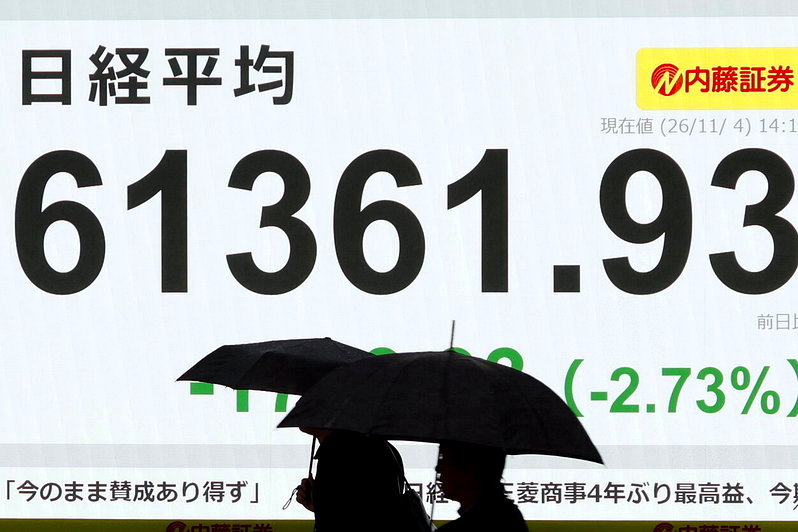
Memory chip leaders Samsung Electronics and SK Hynix both fell more than 5% in intraday trading on Thursday, leaving thesouth korea The benchmark share price index Kospi fell more than 3%. In comparison, share prices of automakers including Toyota Motor and Honda Motor rose about 5%, pushing Japan’s Topix stock index (TOPIX) up 1.4%. Internet stocks rose in mainland China, also benefited from consumer themes, found supporthong kong The Hang Seng Technology Index rose 5%.
The Democratic Party appealed to voters’ skepticism about AI during the US midterm elections, raising market concerns that data center construction plans could be delayed. The decline in technology stocks has led investors to turn to undervalued stocks in the market; Additionally, automakers are also seen as an industry that could benefit from tariff cuts by US President Trump.
“We are seeing continued significant exits from chipmakers. The market is punishing the industries that are most sensitive to potential regulatory hurdles, which is the semiconductor industry,” said Walter, chief market analyst at KCM Trade.
Other chip stocks falling in Asia included Japan’s Advantest and Taiwan’s MediaTek. After pulling money out of these technology stocks, they turned to consumer stocks such as South Korea’s Hyundai Motor and Australian retailer Wesfarmers, as well as Hong Kong-listed Chinese internet companies including Tencent Holdings and Alibaba Group.
Although advancers more than doubled the number of decliners, the MSCI Asia Pacific index fluctuated within a narrow range due to the considerable weighting of semiconductor stocks in the regional index.
Other strong performers included travel-related stocks. Travel stocks rose as oil prices fell and hopes for an end to the war with Iran rose.
The outcome of this election has deepened investor skepticism about the huge debt accumulated in AI infrastructure, and also raised questions in the market about whether these investments can ultimately achieve sufficient returns to support the costs. The Asian Chipmakers Index compiled by Bloomberg has fallen more than 20% in the past month.
“Long-term investors such as global macro funds, sovereign wealth funds and active retirement funds today are clearly allocating funds from growth stocks to value stocks, including AI-related stocks,” said Yamato Tamura, head of equity trading at Phillip Securities.
He said that once the trend of long-term funds starts, it is not easy to reverse the trend.
Summary FAQ
-
The main reason for this is that the Democratic Party won a landslide victory in the midterm elections. The market is worried that the expansion of AI infrastructure and investment in data centers may be affected, which in turn will affect chip and related technology stocks, causing funds to shift to lower valuation stocks.
-
Samsung Electronics and SK Hynix both fell more than 5% intraday, leading South Korea’s Kospi to fall more than 3%; Japan’s Advantest and Taiwan’s MediaTek also weakened, and the Bloomberg Asian Chip Manufacturers Index fell more than 20% in the past month.
-
The shift of funds into automobile stocks such as Toyota and Honda, as well as consumer goods and Chinese internet stocks such as Tencent and Alibaba, suggests that investors are shifting from high-value AI development stocks to lower-value value stocks, and it may be difficult to reverse the long-term capital flows.