
AI summary
Summary of article:
After the Democratic Party’s victory in the midterm elections, it took control of Congress. This will have a wide-ranging impact on AI, finance, energy, healthcare and M&A markets through investigation, supervision and policy promotion.
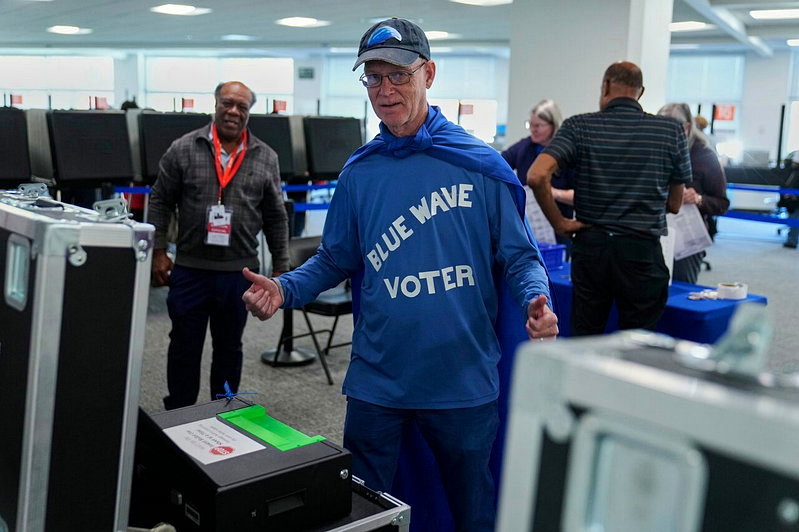
democratic party The US midterm elections swept both houses of Congress, with rising costs of living and the war in Iran angering a majority of voters. If a “blue wave” emerges, what impact will it have on the business world?
The Wall Street Journal reported that although the Democrats took full control of Congress after their victory, it was still not easy to pass legislation because the President of the United Statestrump He has threatened to call himself Mr. Number. The Democratic Party should be able to highlight its most important agenda, such as reducing tariffs, and vigorously investigate companies and government agencies that violate the Democratic Party’s policy priorities.
With the new public mandate, Democrats are expected to launch investigations into a number of issues, including the First Family’s cryptocurrency dealings and questionable government contracts favoring certain parties. The possible effects of the “blue wave” are as follows:
From big banks, technology giants to oil giants, industry players are worried that after the Democratic Party takes control of the federal Senate, they will launch large-scale investigations and make good use of subpoena power. It is expected to target the Trump family and alleged corruption, as well as investigate the flow of political donations from big companies. Banks and financial companies, including cryptocurrency companies, will be keeping a close eye on Warren, who could take charge of the Senate Banking Committee. Among the topics he is concerned about are the Trump family’s dealings with the business community, artificial intelligence (AI) investment plans, initial public offerings (IPOs), and the Federal Reserve (Fed), which may hold hearings to subpoena corporate CEOs to explain why.
Most American voters, regardless of party affiliation, oppose the construction of data centers. But at the federal level, Democratic candidates are more skeptical of AI than Republicans, which could thwart a “sweetheart tax deal.” The most far-reaching impact is at the state and local level, particularly in Georgia and Texas, where data center developers are most active, with Democratic gubernatorial candidates advocating a moratorium on the construction of new data centers. Democratic candidates in Michigan also called for a temporary ban on construction.
A Democrat victory in the Senate would be tantamount to dismantling Trump’s already limited influence over the Fed. It is known that Trump wants the Fed to lower interest rates, ease capital requirements for big banks, and allow cryptocurrency and fintech companies to more easily access the Fed’s payments system. Three of the seven Fed governors were appointed by Trump, but he needs at least a fourth seat. There will be no vacancy until Director Ball’s term ends in early 2028, unless a current director resigns or Trump is successful in ousting someone.
Midterm election results may also influence biofuel policy and help improve energy supply. Farm groups hope Democrats will expand the use of biofuels made from corn and soybeans mixed with gasoline and diesel, which would increase demand for those crops. Compared to Republicans representing major oil-producing states, the Democratic Party has a more friendly attitude toward biofuel expansion. Some industry officials believe that if both parties cooperate to promote it, it is expected to help farmers increase sales.
Trump and his political allies support legislation to tightly regulate credit card fees, and Trump himself hopes to pass relevant bills as soon as possible. This will impact banks’ credit card revenues and end the market dominance of Visa and MasterCard, but merchants are welcoming it. Democrats also agreed to reduce credit card fees and costs, making it one of the rare issues with bipartisan support. However, if Kansas Senator Roger Marshall, who pushed the bill, loses the election on the 3rd, the case will lose a heavy Republican supporter.
A Democratic victory could lead to closer ties between the encryption industry and the Trump administration. At the same time, since the Trump 2.0 administration took office, the antitrust enforcement stance has loosened, encouraging various industries to pursue mergers and acquisitions. Companies are expected to make more efforts to speed up merger and acquisition plans and complete them before the end of Trump’s term, given that only the executive branch has the power to overturn such transactions following the Democratic Party’s large lead in the midterm elections.