
AI summary
Summary of article:
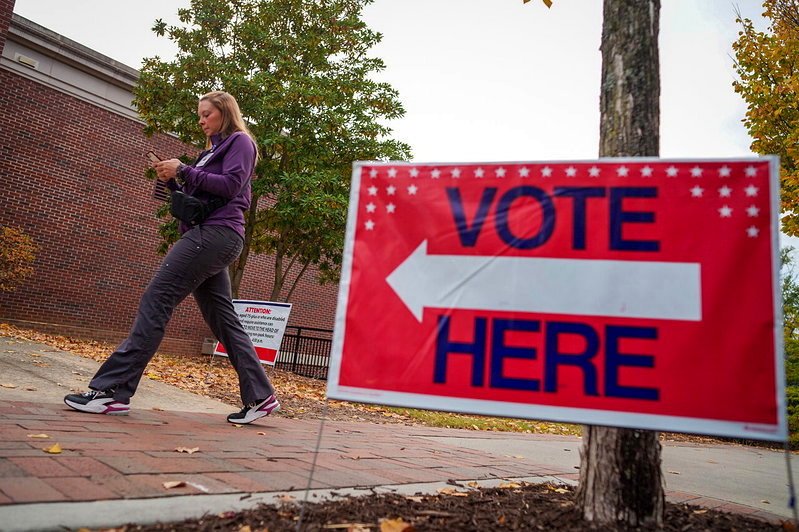
The US midterm elections showed widespread voter dissatisfaction with both parties. Party divisions and the increase in independent voters have given emerging candidates and cross-party issues such as cost of living more opportunity to come to the fore.
Wall Street Journal 2 analysis from this yearmidterm elections It can be seen that the fragmentation of party factions is creating a historic opportunity for new candidates and emerging policies to stand; American dissatisfaction with both parties has reached such high levels that new possibilities for political reform have emerged and large numbers of voters are happy that change can come.
The arrival of Election Day finally brings an end to a tumultuous election season, with both parties facing factional divisions.democratic party Michigan Congresswoman Haley Stevens moves into MAGA camp ahead of electionrepublican party Michigan U.S. Senate candidate Mike Rogers endorsed President Trump’s endorsement of Texas Attorney General Ken Paxton, who was impeached and impeached, to run for the U.S. Senate. However, as Paxton’s popularity declined, Trump made derogatory comments about him during his campaign.
The report analyzes that many voters this year have self-assessed whether they should remain loyal to the political parties they originally supported. This phenomenon has led to high mobility in the voter structure. A new generation of political leaders with the ability to reshape the party has won the support of voters. The government must help people solve the cost of living problem, which has become an area of consensus with cross-party support.
Environmental factors have led both parties to seek new ways to respond more actively to voter demands. The election results will indicate the future direction of both parties. In addition to revealing the range of changes the new Congress could bring, they will also foreshadow the largest open presidential primary in years.
Former Republican Governor of Tennessee Bill Haslam said, “We have certainly reached a turning point, and the question is, does anything new come from this?”
From an optimistic perspective, he said, dissatisfaction on both sides could lead to the idea of ”let’s try a new approach.”
A Gallup poll last month showed that only 15% of voters believed members of Congress deserved re-election, the lowest level since 1994. A Gallup poll last year showed that the proportion of self-identified voters reached a record high of 45%, reflecting voters’ high dissatisfaction with both parties.
The increased voter turnout comes as a group of young political newcomers struggle to perform.
Jon Ossoff, a 39-year-old Democratic Georgia US senator, has attracted 3 million followers on social media by criticizing the Trump administration.
37-year-old James Tallarico of Texas was able to represent the Democratic Party in the US Senate, largely due to his personal qualities of oratory.
Brandon Gill, 32, is the youngest Republican Congressman and has 2 million followers on Instagram and X.
Summary FAQ
-
The most prominent sign is that voters are dissatisfied with both the Democratic Party and the Republican Party, and factional divisions within both parties have become increasingly apparent, causing voters to reevaluate their party loyalties, creating room for change in the political landscape.
-
Because voter mobility has increased, more people are dissatisfied with the status quo, making it easier to accept new candidates and new policies. The article also notes that solving the cost of living issue has become one of the few issues that can achieve cross-party consensus.
-
The article mentions young politicians such as Ossaf, Tallarico and Brendan Gill, suggesting that a new generation of candidates are relying on community influence, eloquence and image to win support, indicating that voters are willing to try new faces that are different from traditional politicians.