
AI summary
Summary of article:
With the possibility of the United States and Israel attacking Iran again after the election, China is intensively promoting diplomacy in the Middle East, trying to promote coolness and dialogue, and taking advantage of opportunities to increase its presence in regional security.
with the United States andisrael There may be another attack after the mid-term elections in America on the 3rd.iran China is launching intensified diplomatic actions in the Middle East. It is one of Beijing’s most intensive public diplomatic actions since the United States and Israel attacked Iran in February. The Washington Post reported that as the situation in the Middle East may enter a more dangerous phase, the Chinese leadership is trying to gain a seat in the process of determining the future direction of the region.
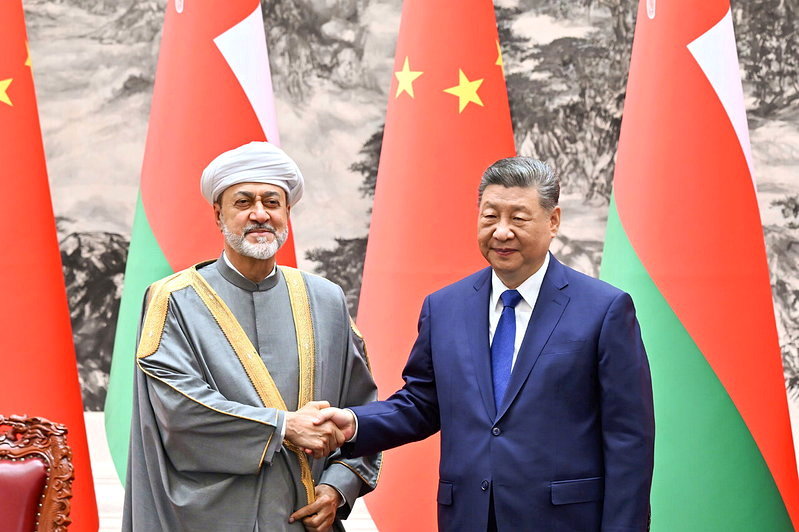
Chinese President Xi Jinping and Foreign Ministerwang yi On the 2nd, he held talks with senior officials from Oman, Iran and Saudi Arabia in Beijing. Among them, the meeting between Omani Sultan Haitham bin Tariq and Xi Jinping marked the first time an Omani head of state visited Beijing in the 48 years since the two countries established diplomatic relations. The Chinese Foreign Ministry announced the same day that it would send three senior envoys to seven countries, covering the Persian Gulf and Horn of Africa regions.
The US military is preparing for possible further attacks. Although US President Trump has publicly ruled out the possibility of resuming air strikes before the elections, the situation could worsen after the elections. The White House has sent conflicting signals about the possibility of a diplomatic end to the war. Persian Gulf countries are eager to break the impasse between the United States and Iran, fearing that a new round of war will once again provoke Iranian retaliation and spread the war to their own doorstep.
Despite China’s deepening ties with Middle Eastern countries and repeated efforts to portray itself as a peacemaker, Beijing has so far struggled to translate its diplomatic ambitions into practical results. However, this wave of intense diplomatic actions also reflects Beijing’s growing ability to promote dialogue between major parties. The official minutes of the meeting between Xi Jinping and Wang Yi stressed that Beijing was striving to immediately de-escalate tensions, initiate dialogue and play a bigger role in shaping the regional security environment.
Craig Singleton, senior director of China programs at the Foundation for Defense of Democracies (FDD), a think tank that advocates a tough stance on Iran, said: “Beijing now has every reason to actively intervene. Trump has again threatened Iran, Persian Gulf countries are concerned about a re-escalation of the conflict, and Riyadh has asked China to use its relations with Tehran to moderate Iran’s actions.”
“If the situation in the Middle East starts to move toward some final stage of diplomatic negotiations, Beijing will want a seat at the table, or at least be seen trying to help shape that process,” he said.
The Post reported that Beijing has important interests to consider and hopes to avoid escalating the situation again. China is highly dependent on energy transported through the Strait of Hormuz and has invested billions of dollars in the Middle East. A prolonged conflict could disrupt shipping and supply chains and weaken demand for Chinese exports. At the same time, Beijing intends to seize diplomatic opportunities presented by the conflict and portray itself as a force for stability.
Singleton believes that Beijing’s diplomatic actions in the Middle East are “somewhat like the Ukrainian model.” “Continue to engage, send special envoys and ensure that no matter what the situation, China will not be singled out,” he said.
Summary FAQ
-
Since the United States and Israel may attack Iran again after the US midterm elections, the regional situation is in danger. China is worried about the impact on energy, shipping and investment. Therefore, it is taking advantage of the situation to strengthen diplomatic intervention and try to carve out its own place in the changing situation.
-
Xi Jinping met with Sultan Haitham of Oman in Beijing, the first visit by an Omani head of state to Beijing; Wang Yi held talks with high-level officials from Iran and Saudi Arabia, highlighting that China is simultaneously reaching out to multiple parties in the region to promote dialogue to ease tensions.
-
The Post believes that China intends to act as a peacemaker and maintain its presence through special envoys and negotiations. However, although Beijing may encourage dialogue, it has so far been difficult to translate its diplomatic ambitions into concrete outcomes. It’s more about avoiding being left out of the conversation.