
AI summary
Summary of article:
The British parliamentary report warned that Britain’s growing economic and trade dependence on China could undermine its freedom of movement and deterrence capabilities in the face of the Taiwan Strait crisis, and called on the government to strengthen risk management and contingency preparedness.
The Business, Innovation, Science and Trade Committee of the British Parliament today released a report on “China and the British Economy”, part of which expresses concerns about China’s efforts to unilaterally change the status quo on Taiwan. The committee warned that dependence on China in economic and trade areas could restrict Britain’s freedom of movement and deter China’s aggressive behavior in the Taiwan Strait.
The report notes that the UK is becoming increasingly dependent on China for key import trade goods, and this is putting the UK at risk of economic pressure. If this trend continues, the UK’s freedom of movement may be restricted in the face of China’s aggressive actions, such as across the Taiwan Strait, which in turn will affect its deterrence against China.
The committee launched an investigation into Chinese factors in the British economy in March and sought views from government officials, think tanks, experts and the business community at large. Today it released a summary report of more than 100 pages to provide policy recommendations to the government. In theory, the officer should issue a formal written response within 60 days (as early as January next year).
The committee’s report made many criticisms of the British government’s China policy, but many of them were problems that had been repeatedly pointed out by all walks of life, including a lack of cross-ministerial, cross-sector and cross-local coordination and coherence; There is a need to improve transparency of government decision making; All areas of life need clear practical guidance; And the Labor government that came to power in July 2024 has so far failed to deliver on its campaign promise of a comprehensive inventory of relations with China (China audit).
The report noted that the British government has not yet completed a comprehensive inventory of its relations with China, nor has it issued the new China strategy expected by all walks of life. It will begin re-engaging with China immediately in 2024, and in January this year, it will be the first time for a sitting British prime minister to visit China after eight years of non-compliance. This is a marked departure from previous tense UK-China relations.
The British government announced in June last year that it had completed a comprehensive review of its relationship with China, but today’s committee report noted that the government has never released a formal review findings report.
Committee chairman and Labor MP Liam Byrne said it would be difficult for British companies to properly plan for the future when the government’s China policy is ad hoc and lacks a long-term vision.
He noted that the government’s China policy and actions have caused the UK to miss opportunities to promote its interests, fail to properly manage risks, and even delay important decisions until the last minute, which require greater transparency and persuasiveness.
Byrne stressed that the UK should be more active in shaping and controlling its relationship with China, and create rules of the game that “cut until it hurts.” Whether it is protecting British interests, managing risks, seizing opportunities, or fighting against unfair market practices, it would otherwise risk having Beijing or Washington making decisions for London.
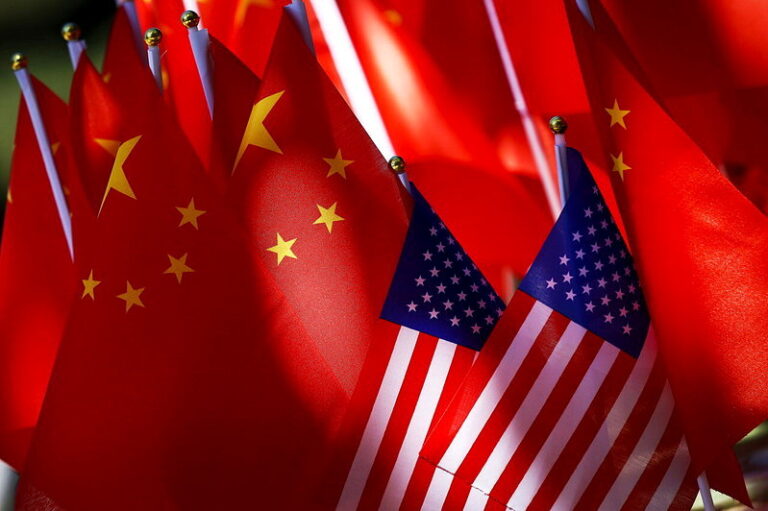
The report includes a section focusing on “avoiding coercion, dependency and forced labor and maintaining freedom of movement”. Among them, in the section focusing on import and export trade and supply chains, the report lists China’s attempt to change the “status quo in Taiwan” (status quo in Taiwan) through unilateral action as one of the risks.
The report notes that China is Britain’s third largest import source after the United States and Germany. Following the COVID-19 (coronavirus disease 2019) pandemic, Britain’s import dependence on China in key sectors has increased rather than decreased.
Official information shows that between 2024 and 2025, there will be a total of 4,482 types of imported goods coming to the UK from China, of which 3,380 are in “fragile (susceptible to disruption) supply chains” and 911 are “critical” to the UK, especially chemicals, machinery and equipment, and various industrial products, which are the UK’s key raw materials, biotech pharmaceuticals, information and Affect communication technology, energy. systems, and even national defense requirements.
Furthermore, even if they are not directly imported from China, other international supply sources are also dependent on China to varying degrees.
The Bank of England, the Bank of England, warned in 2024 that the UK has a “significant underlying dependence” on China, largely because “intermediate products supplied by the United States contain inputs from China.” China will still be the United States’ third largest trading partner in 2025.
Another example is that about 1/3 of the generic medicines used in the British health care system are produced in India, but up to 70% of the active ingredients (active ingredients) of these medicines come from China.