
AI summary
Summary of article:
Egypt and Greece have reached a preliminary agreement on the land dispute for St. Catherine’s Monastery, but the agreement has not been formally signed, and there are still objections within the monastery. Subsequent developments remain to be seen.
Correctegypt Egypt and Greece have long been in dispute over the ownership of the “St. Catherine’s Monastery” and surrounding land in the Sinai Peninsula, but they finally made a breakthrough recently. The monastery’s abbot recently agreed to sign an agreement confirming Egypt’s acquisition of ownership, while the monastery retains rights for religious use.
Although the property rights dispute that has been going on for several years appears to be resolved, there are differing voices within the monastery and the agreement has not yet been signed. The legal and diplomatic dispute is not completely over yet.
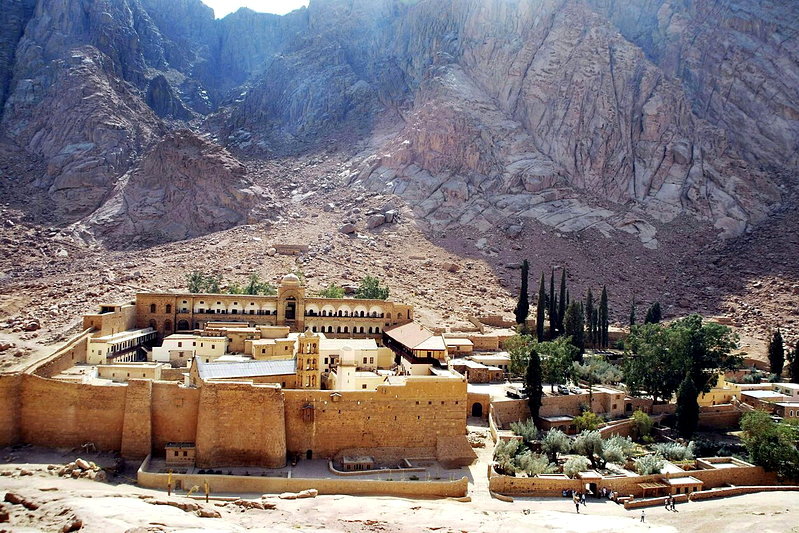
St. Catherine’s Monastery is one of the oldest surviving Christian monasteries in the world. Completed between approximately 548 and 565 AD, it is located near the foothills of Mount Moses in Egypt’s Sinai Peninsula, where the Prophet Moses received the Ten Commandments. It is an important pilgrimage site for Orthodox Christians and Christians around the world. The United Nations Educational, Scientific and Cultural Organization (UNESCO) incorporated the “Saint Catherine Region” in 2002.world Heritage .
According to Greek media “Greece Reporter”, the monastery has been at odds with the Egyptian government for about 10 years over the ownership of its land. In 2025, Greece initiated diplomatic contacts with the Egyptian government to find a compromise. After several negotiations between the two parties, the abbot of St. Catherine’s Monastery and Archbishop Simeon finally issued a statement on 24 October, expressing their willingness to accept the Egyptian government’s proposal to end the dispute and ensure the normal operation of the monastery.
Simon further said that he has received the support of the Patriarchs of Constantinople, Alexandria and Jerusalem, as well as the churches of Cyprus and Greece, and that he will sign an agreement with the Egyptian government as soon as the health situation is favorable.
Egyptian media “Al Ahram” quoted Egyptian Foreign Minister Badr Abdellatty as saying that he welcomed Simon’s letter of understanding and reiterated that the monastery has a history of more than 1,600 years in Egypt and has demonstrated its commitment to protecting the holy sites and the shared heritage of mankind.
Greek Prime Minister Kyriakos Mitsotakis also confirmed progress in diplomatic talks between the two sides, calling it a “historic turning point”. Greek Foreign Minister George Gerapatritis thanked Egyptian President Abdel Fattah el-Sisi for coordinating the process, and expressed hope that the agreement would permanently protect the religious nature and continued operation of the monastery.
In the agreement, Egypt acknowledged that the monastery had the right to manage internal affairs. It will also ensure that churches and pilgrimage sites continue to be used for religious purposes. It will also allow the monastery to apply for a long-term lease of some of the surrounding land. It will also allow Greek monks to obtain convenient long-term legal residence rights and protect the daily life of the monastery.
Al-Ahram newspaper reported that legal proceedings between the two parties began in 2015. The dispute escalated in 2025, when Egypt’s Ismailia Court of Appeal confirmed that the Egyptian government retained ownership of the disputed property and that the monks at the monastery had religious use rights. The decision has raised concerns among Greek authorities and Orthodox leaders about the continued existence of the monastery and its religious nature.
However, former Archbishop Damianos believed that the monastery had a history of independent operation for over 1,500 years, and also questioned whether the monks were not fully consulted before the monastery’s decision, so he refused to publicly acknowledge the agreement.
A Greek government spokesperson responded on 31 October and promised that the full contents of the agreement would be announced once the process was completed.
Furthermore, for the Greek Orthodox Church monasteries are not just ancient buildings, but also religious heritage that spans thousands of years. The Orthodox Times reported that the opposition is also concerned that once ownership of the land returns to Egypt, the monks’ long-term solitary life and the management of the monastery and surrounding lands will be affected and disturbed.
Since the Ismailia Court of Appeal postponed the land lawsuit related to the monastery on 26 October to 27 December, and the date of official signing of the agreement has not yet been determined; Therefore, this legal dispute concerning the future of one of the world’s oldest Christian monasteries is not yet fully over, and will continue to test how Egypt and Greece strike a balance between national sovereignty and religious traditions.
Summary FAQ
-
The monastery’s abbot Simon has said he is willing to accept Egypt’s offer, confirming that Egypt would gain ownership of the land while the monastery would retain religious use rights, marking a breakthrough in the long-running standoff between the two sides.
-
St. Catherine’s Monastery was built approximately between 548 and 565 AD. It is one of the oldest Christian monasteries in the world and is located near Mount Moses. It has high pilgrimage value for Orthodox Christians and Christians around the world.
-
not yet. Although progress has been made in negotiations, a formal agreement has not yet been signed. Former archbishops and some monks are also in opposition. Moreover, the related trial has been postponed to December 27, and the dispute has not actually ended.